
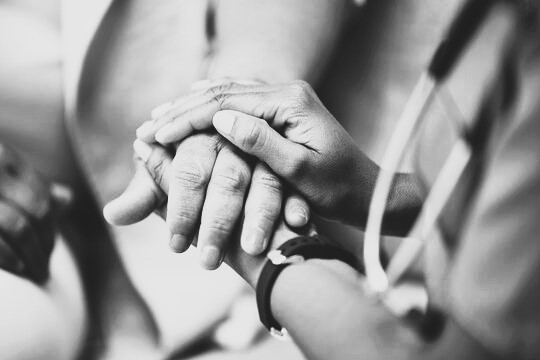
This woman wished to remain fully anonymous.
When she first started feeling unwell, she brushed it off. Like many people, she assumed it was just fatigue, something minor that would pass. But as time went on, the discomfort turned into pain, and the small signs she had ignored became impossible to overlook.
By the time she finally sought medical attention, the cancer had already spread to multiple organs.
“When I was first diagnosed, I thought one surgery would be enough,” she says. “But then the doctors told me it had already progressed. I was in the later stages. There were signs earlier, but I didn’t take them seriously. I regret that now.”
She underwent two major surgeries—one in April and another in December—in an effort to remove the tumors. The procedures were difficult, and each time, her body needed months to recover. Unfortunately, the cancer was persistent.
“They found more after the second surgery. It had already started spreading beyond the original site.”
From there, she began a year-long chemotherapy regimen, enduring multiple cycles in hopes of slowing the disease. But cancer is relentless. After the chemotherapy, her doctors moved her to immunotherapy, trying to help her immune system recognize and fight the cancer itself.
“Immunotherapy works differently for everyone,” she explains. “For me, it helped at first, but there were still signs of progression. The doctors had to adjust my treatment plan constantly.”
Because of the metastasis, her future remains uncertain. “Cancer is unpredictable,” she says. “You treat one part, and another part flares up. It’s like playing a never-ending game of whack-a-mole.”
Still, she finds comfort in the fact that her doctors are attentive, thorough, and always thinking ahead.
“They’re not just treating my disease; they’re treating me as a person,” she says. “They explain everything. They don’t rush decisions. They take the time to make sure I understand what’s happening to my body. That trust is what keeps me going.”
Despite the hardships, she remains hopeful and deeply grateful for the care she’s receiving.
“As a psychology student, I always believed in the power of the mind. Your mentality is everything. If I had let fear consume me, I don’t think I would have made it this far.”
She refuses to let herself dwell on worst-case scenarios. Unlike some cancer patients who share every medical update with others, she has chosen to distance herself from patient support groups.
“Every case is different. I don’t want to compare my progress to someone else’s and start thinking, ‘Why is their treatment working better than mine?’ It would only add to my anxiety. So I focus on myself, my body, my doctors. That’s it.”
She avoids reading too much online about cancer treatments as well. “The internet is full of stories that can make you lose hope. I trust my doctors. They know my case better than any article on the internet ever could.”
Beyond medical treatment, the kindness of her doctors and nurses has made all the difference.
“They check on me all the time, not just as patients but as human beings. One of my doctors even texted me late at night when I had heart issues, guiding me through what to do until I could get to the hospital.”
Even hospital staff who aren’t directly involved in her care have shown her extraordinary kindness.
“I remember arriving at the hospital with nothing. I didn’t even have basic necessities like tissues. One of the nurses gave me a package of supplies. It may not seem like much, but to me, that simple act of kindness meant everything.”
Her gratitude extends to the entire medical team, from senior doctors to young nurses. “They’re not just treating an illness—they’re treating a person. And that makes all the difference.”
When asked what she would tell someone who has just been diagnosed, her advice is simple:
“Trust your doctors. If you don’t trust them, you won’t trust the treatment. If you don’t trust the treatment, you won’t heal. Fear and doubt won’t help you—they only drain you of the energy you need to fight.”
She also urges patients to communicate openly with their medical teams. “Tell them everything—your fears, your discomfort, even the small things. They can’t help you if they don’t know what’s wrong.”
And above all, she emphasizes the importance of living for today.
“Everyone’s life is a countdown, cancer or not. So why spend the days we have left worrying? We don’t know how long we’ll be here, but we can choose to make the most of it.”
 Humans of Cancer